Read Beigou as part of Bohai Town
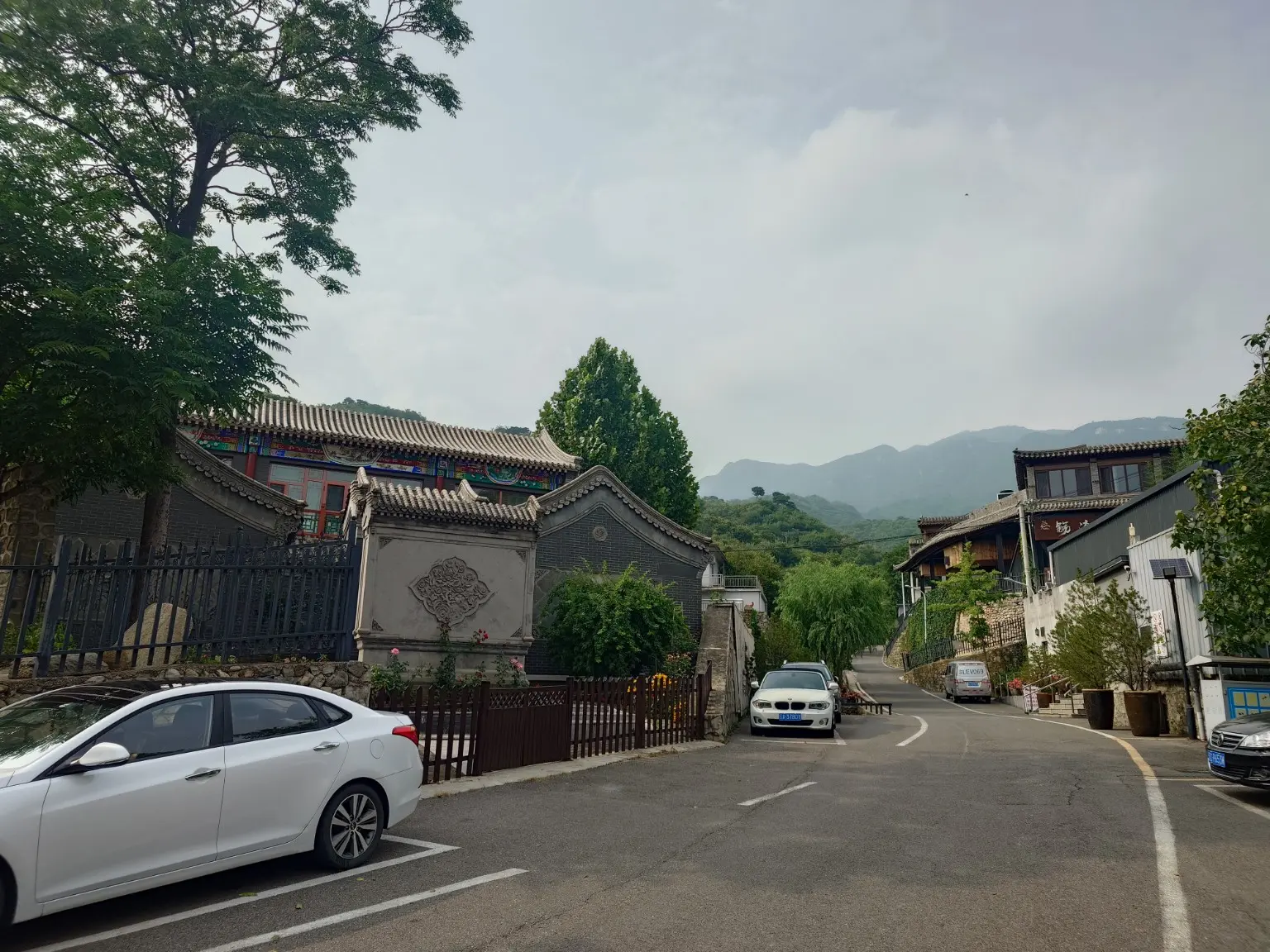
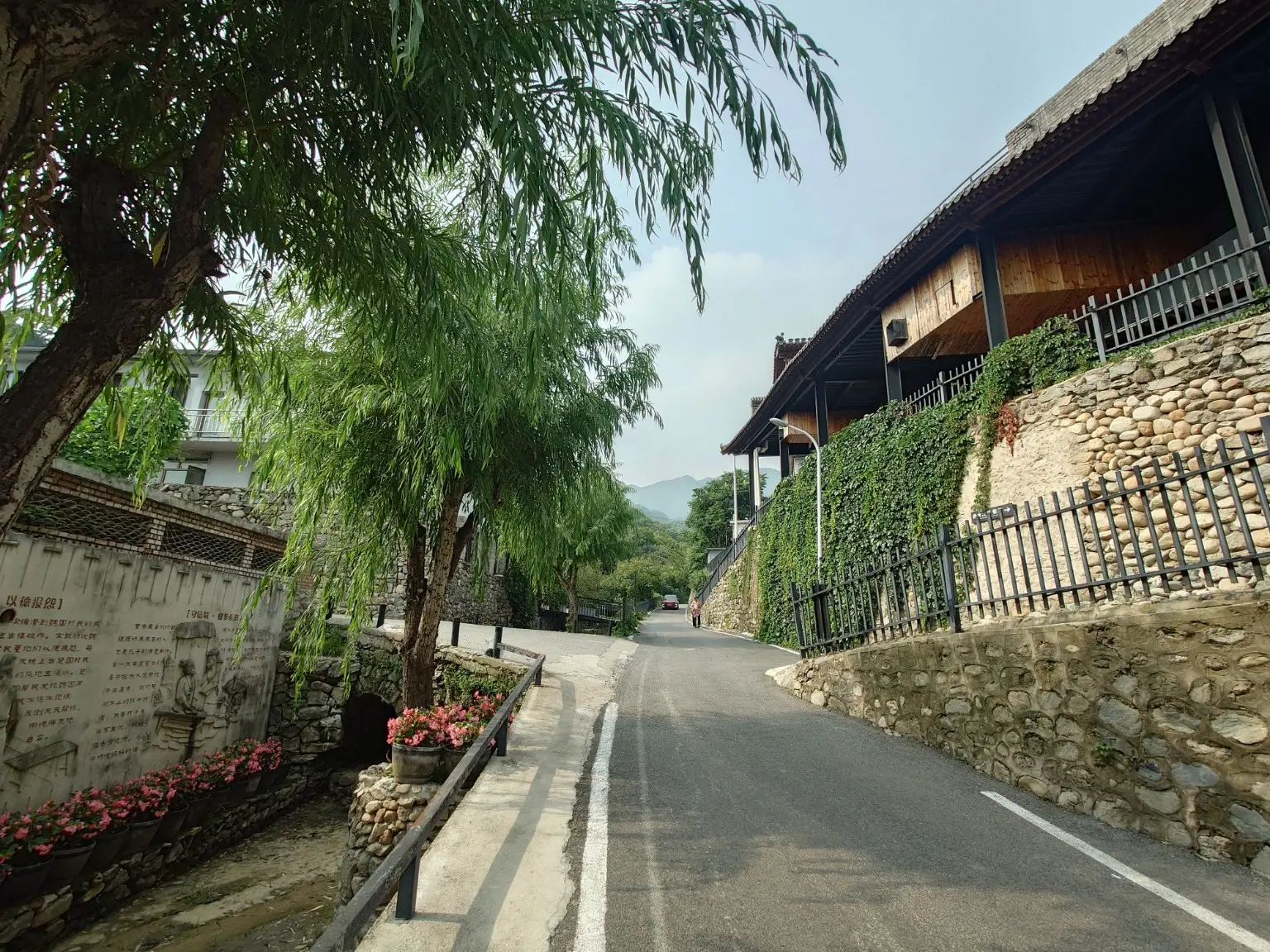
Beigou is the quieter mountain-side part of a wider Bohai Town hospitality ecosystem near the Great Wall. Across nearby villages and commercial clusters, bilingual Chinese–English signs appear not only at premium hotels but at ordinary shops and public facilities.
That normalization matters. A foreign newcomer can live in a rural landscape without every meal, errand or question becoming a language event. The field impression was of an area already accustomed to receiving international visitors rather than a village performing internationalism at a single gate.
This experiment started before anyone called it CyberNomad
Beigou is also a documented case of international founders recognizing commercial and cultural value in rural assets that had been overlooked. Architect Jim Spear and Tang Liang helped turn an abandoned glazed-tile factory into the Brickyard: the original kilns, industrial traces and coloured tile fragments became part of a contemporary hotel rather than being erased.
The result did not stop at one hotel. An official Beijing rural-affairs profile records 17 foreign households coming to invest and lease homes in Beigou, more than 50 of the village's roughly 150 households entering tourism, and 2049 Group investment exceeding RMB 100 million. Accommodation, art, food and design grew around a village that remained visibly connected to its Great Wall landscape and local building culture.
A long-term partnership between incoming operators and the village can turn existing buildings, stories and landscape into new products.
Quiet inside a mature visitor economy
Bohai Town’s popular roadside and leisure areas can become busy, particularly at weekends. Beigou itself sits farther into the mountain landscape and felt calmer. It offers access to the surrounding cafés, hospitality, outdoor recreation and bilingual services without placing every resident in the busiest commercial strip.
Most visible houses in the central village already appeared to be guesthouses or hospitality-related properties. That makes a short first stay easy, but may reduce the supply of ordinary whole courtyards for long-term lease. No reliable current rent sample was obtained during the visit.
Culture that is actually used
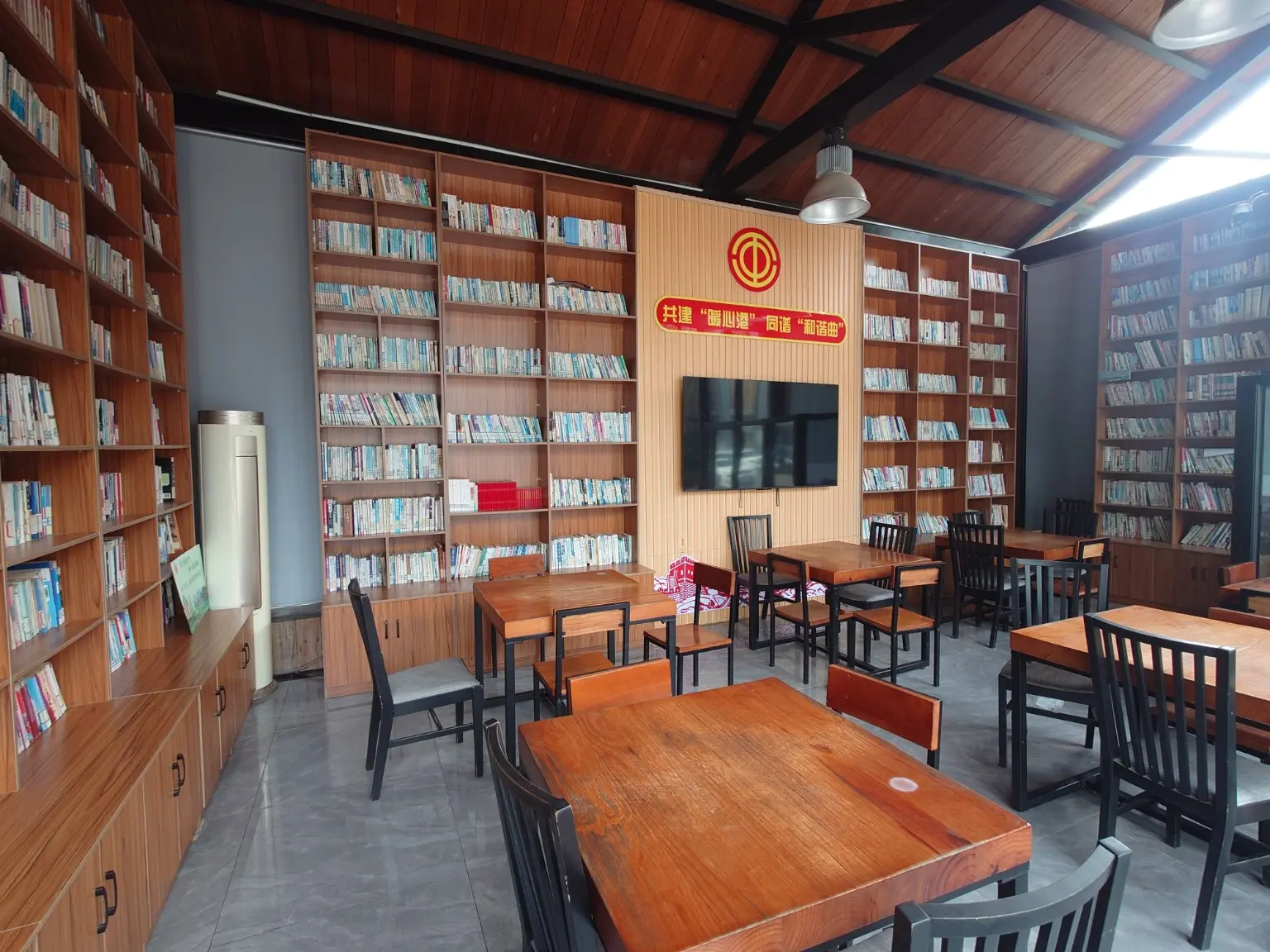
The village has a free public reading room with substantial shelving, tables and air conditioning. It is not a substitute for a formal coworking office, but it is a credible public place to read, study or spend part of a working day.
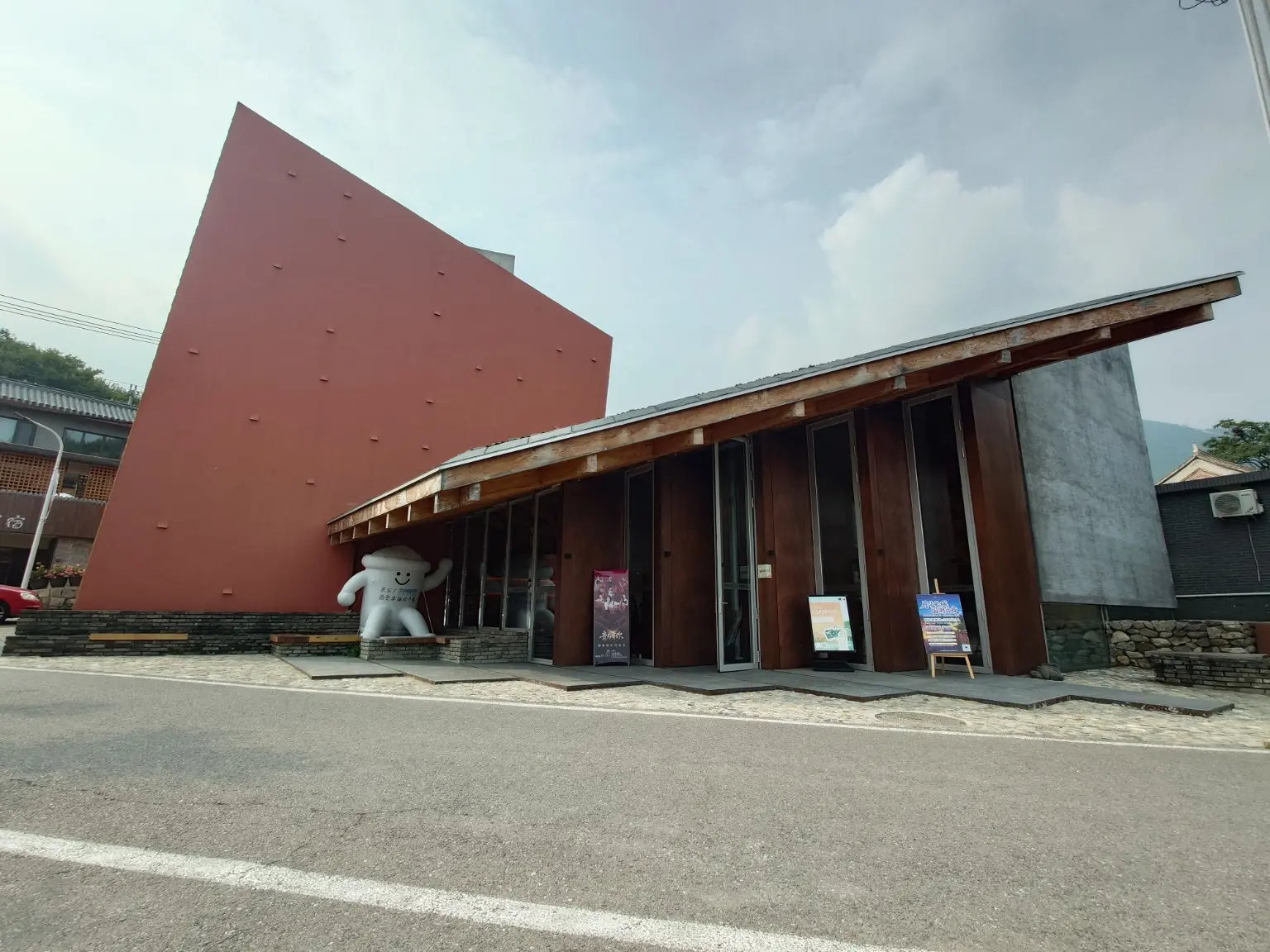
A small contemporary art gallery combines exhibitions of enamel, ceramics, illustration and urban visual art with education and community activity. During the visit, a youth cello ensemble was preparing to rehearse. That small scene matters: the cultural facilities were not empty tourism décor; people were using them.
The wider lifestyle: pets, trails and WTF
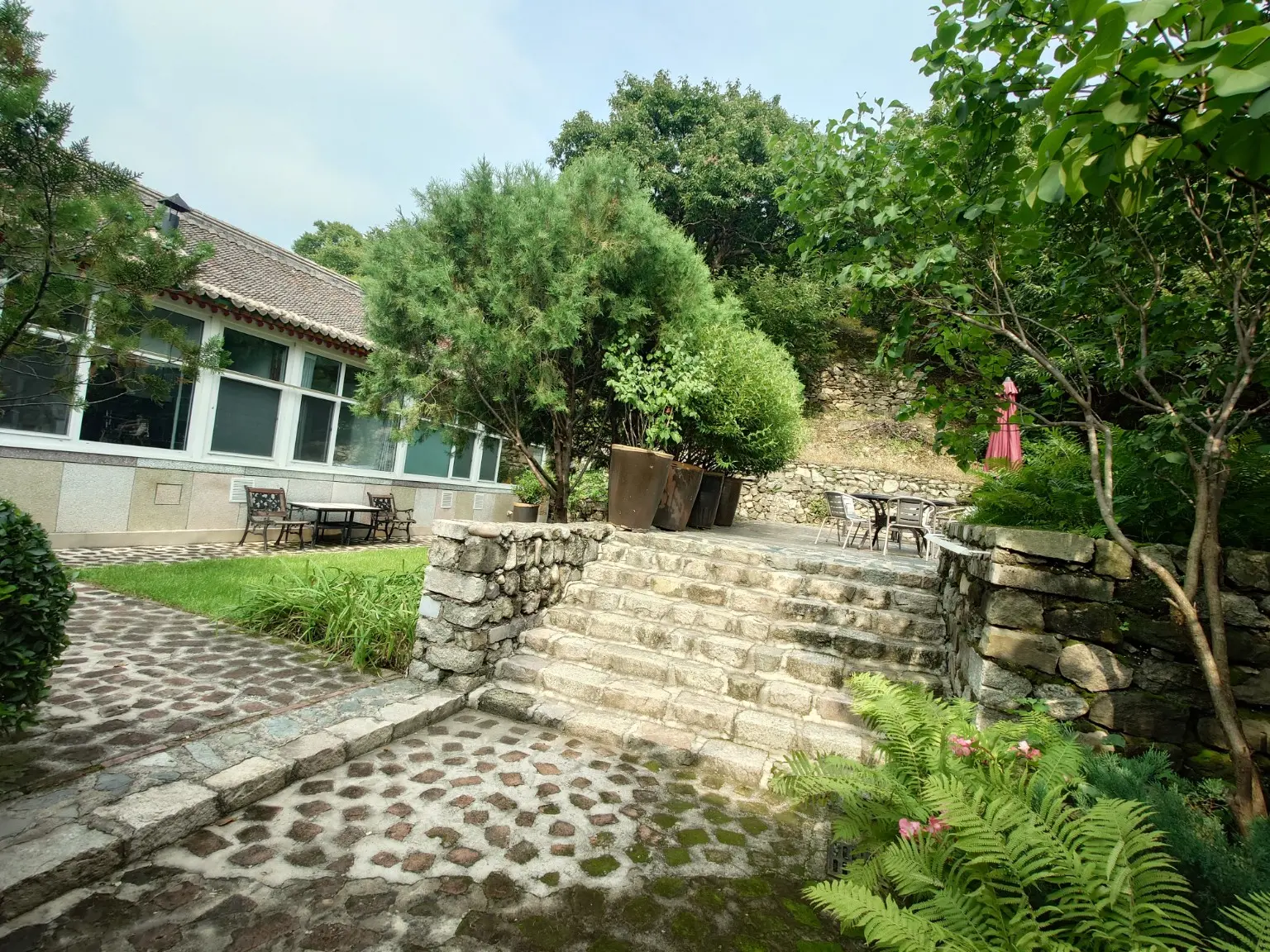
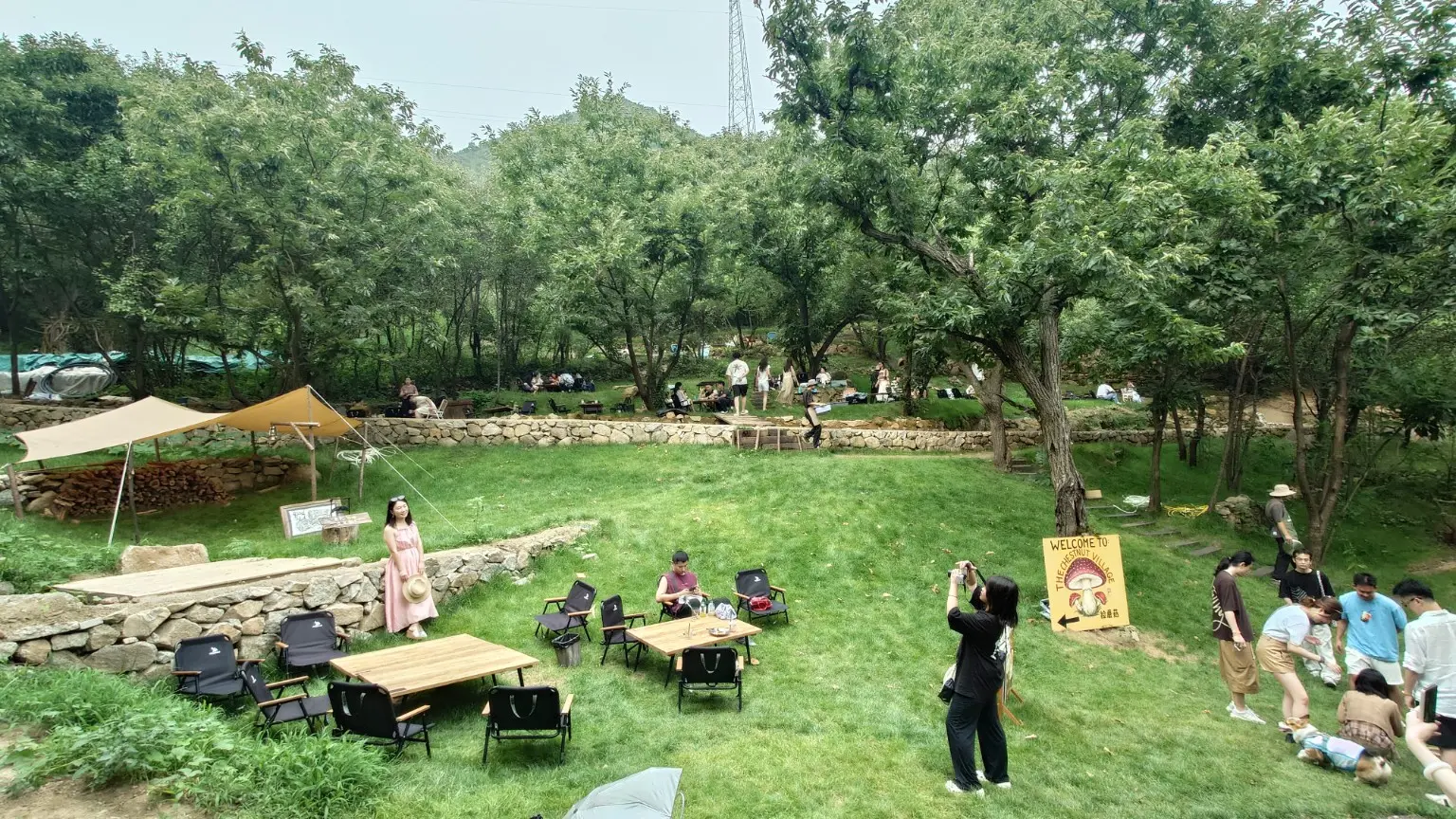
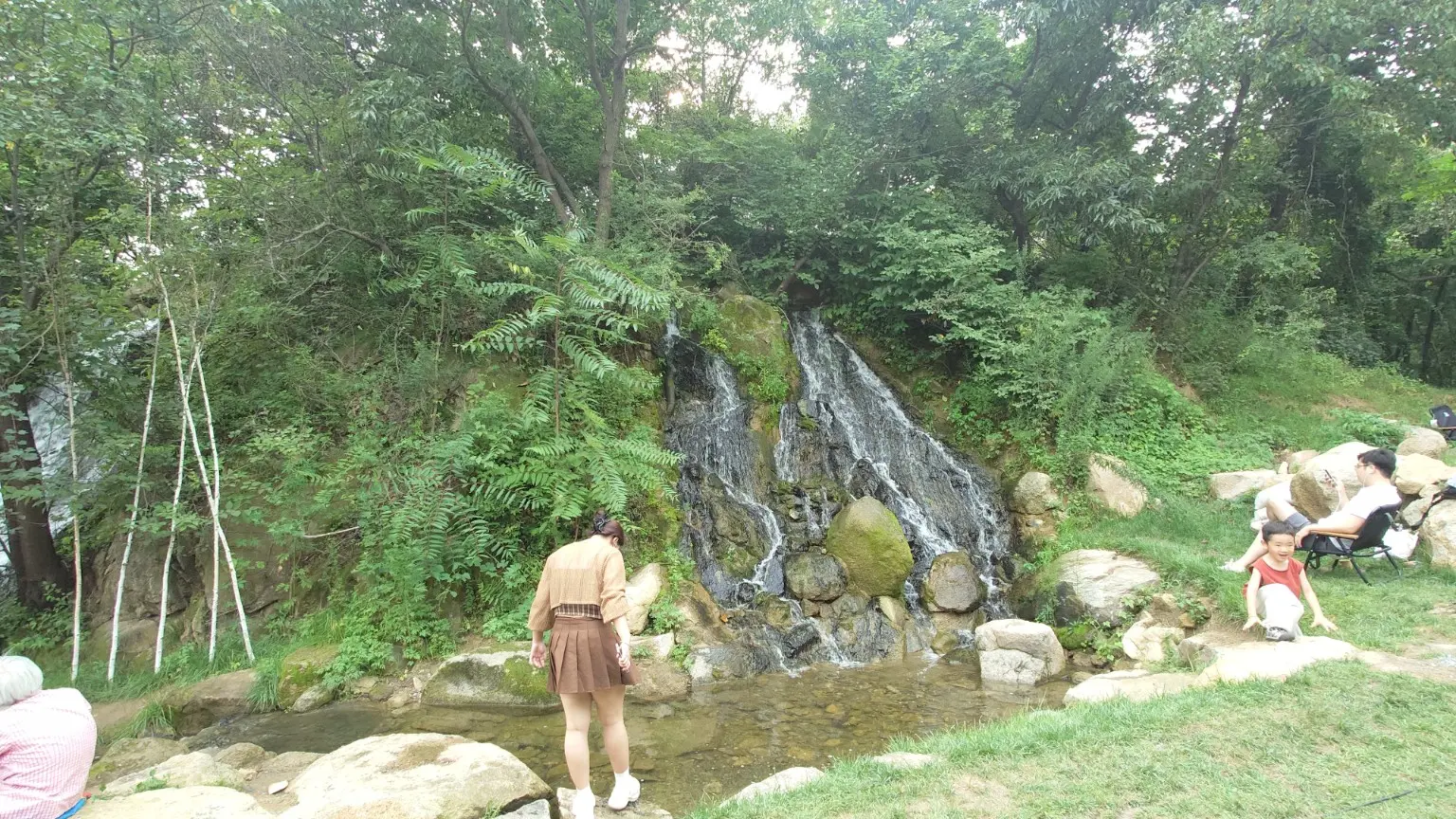
Near the foot of the village, the Chestnut Village WTF café uses “WTF” as an abbreviation for Waterfall—a joke that travels well in English. The site combines a small cascade, wooded lawns, outdoor tables, camping and hiking areas with a deliberately North American lodge-and-camp visual language.
It was unusually pet-friendly by Beijing standards: dogs were accepted both outdoors and inside, and visitors were also seen arriving with birds and a small sheep. Guided mushroom walks offered a controlled way to explore the mountain ecology without encouraging visitors to identify and eat wild fungi on their own.
- Strong fit for pet owners, first-time arrivals, international families and retreat-style remote work.
- Test weekend crowding and weekday opening hours separately.
- Confirm current pet, camping, hiking and guided-foraging rules before travelling.
Best fit—and the trade-off
Choose Beigou when you want mountain quiet without cultural or linguistic isolation. It is one of the easiest rural Beijing environments in which a foreign resident can begin testing village life.
- Advantages: bilingual environment, mature hospitality, visible international visitors, art and reading spaces, pet-friendly recreation.
- Trade-offs: a premium destination economy, likely limited ordinary courtyard supply, and busy surrounding nodes at peak times.
- Best first move: book a local guesthouse and work from the area before searching for a long lease.
Operating card
Beigou is the atlas’s highest-service rural landing signal: it sits inside Bohai Town’s mature hospitality ecosystem, not outside it. That makes a first working stay easy; it does not prove a supply of ordinary long-term courtyards.
- Rent signal — no reliable current whole-courtyard rent sample was obtained. Treat hotel and guesthouse tariffs as short-stay evidence, not a long-lease price.
- Control and ready-state signal — much visible stock is already hospitality-facing. Move-in-ready short stays are common; an ordinary long-term lease needs direct owner or operator confirmation.
- Food, supply and mobility — mature hospitality, restaurants and bilingual service reduce friction. Foreign-style meals or delivery remain address- and time-specific, so test the exact house on a weekday.
- Evidence status — official rural-affairs profile plus field observed; rental supply, delivery coverage and permitted use require address-level verification.
- Local route — for a proposed commercial, hospitality or conversion use, prefer a village-coordinated discussion where available. If the offer begins with a private owner, bring a relevant village-committee or operator contact into the substantive conversation before spending. That route can clarify local facts and point the proposal onward; it does not decide every approval.