Plan the first project
Bring one technical milestone: a material to characterise, a prototype to validate or a research workflow to run. Match the task to the lab, test method and deliverable, then confirm the contracting party, price, schedule and handling of samples and data.
If the work supports your next development decision, scope the first paid task. The local registration and production route discussed at the base brings a Chinese operating entity into a later stage; the first research engagement can be assessed separately.
You can start with real lab infrastructure
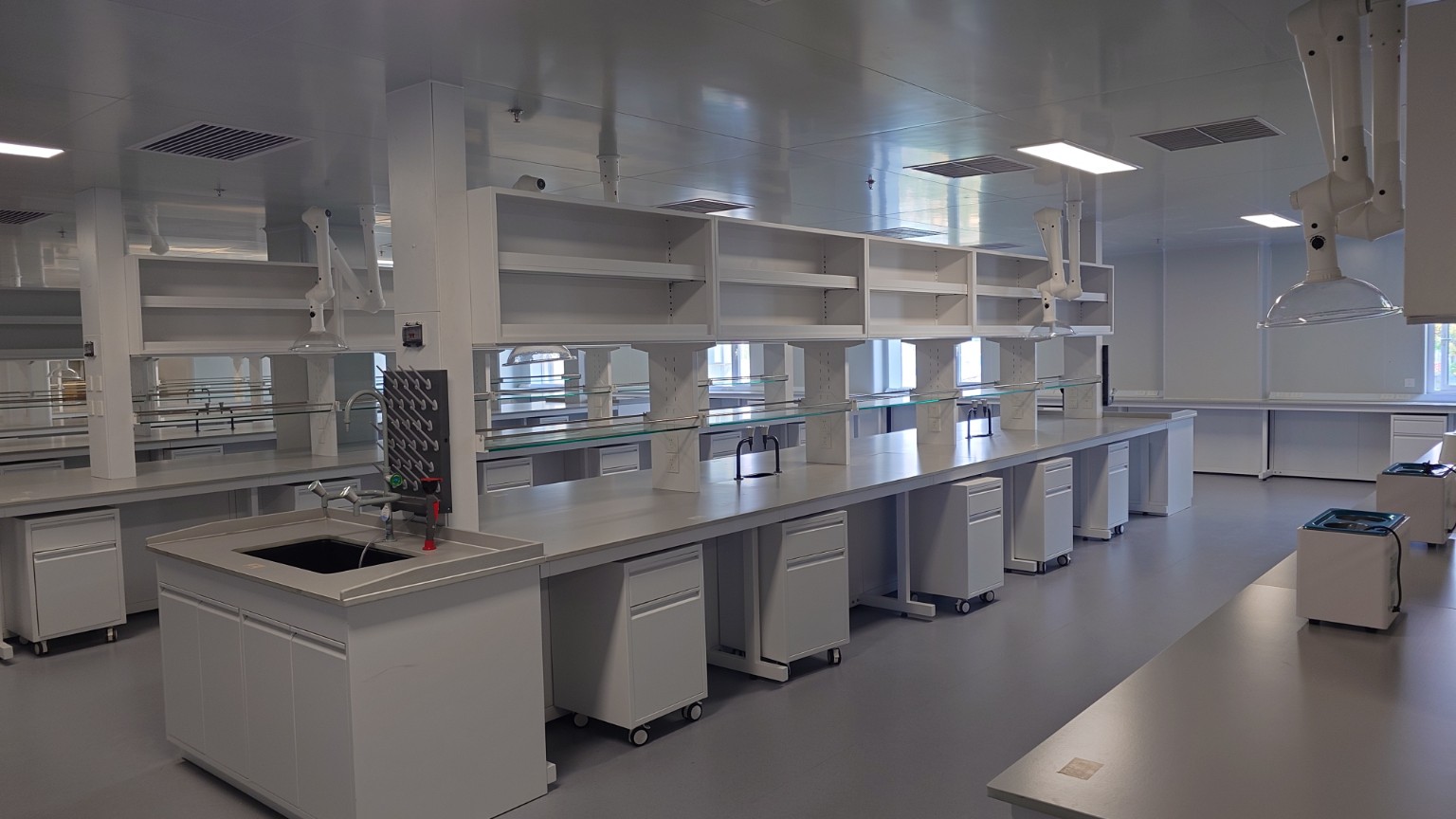
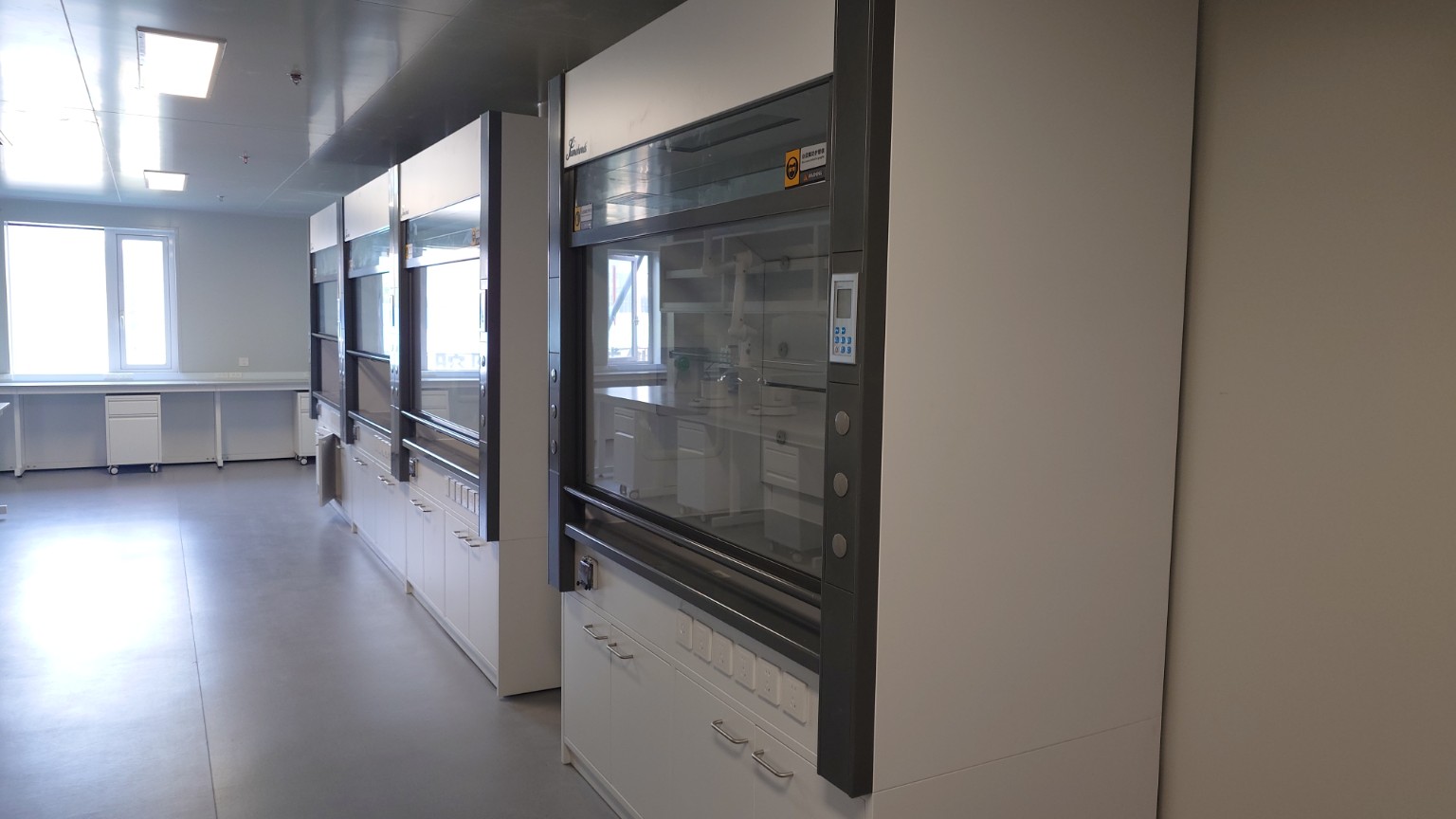
The shared laboratories are already built and equipped with standard benches, ventilation systems, fume hoods and supporting laboratory infrastructure.
Computing and pre-clinical research in the same building
The research center also maintains its own computing infrastructure inside the building. During the visit, we learned that it can support local AI deployment and AI-assisted medical research.
That fits naturally with the work already being done around digital dentistry. The base includes the National Engineering Research Center of Oral Biomaterials and Digital Medical Devices, while its clinical resources include a national oral AI clinical trial center. Beijing's latest policy for Shunyi specifically supports AI applications including intelligent CBCT analysis, autonomous implant-path planning, surgical-robot control, vertical AI models and intelligent agents for medical-device R&D and production.
The animal facilities are another practical detail that is easy to miss from a website. They add on-site support for pre-clinical work on materials, implants and other devices, alongside the laboratories and computing infrastructure.
The building goes further than early R&D
The base opened in July 2026 in the Beijing Capital International Airport Economic Zone. It was jointly developed by Shunyi District and Peking University School and Hospital of Stomatology, with total investment of about RMB 200 million. Beijing's latest public figures put the building at about 35,000 square meters.
Once a project moves beyond the laboratory, several later stages are available in the same system.
The base connects research with incubation, pilot production, testing and clinical work. Its pilot-production accelerator alone provides 7,000 square meters of production space, including standard production areas, Class 100,000 clean workshops, Class 10,000 clean laboratories and assembly areas for active and non-active medical devices.
Testing is also unusually close to the R&D side. The Peking University dental medical-device testing center located at the base is described by the Beijing government as China's only national-level institution dedicated specifically to testing and evaluating dental materials. Clinical work can connect into Peking University's drug and medical-device clinical-trial resources, oral AI clinical trials and research wards.
A materials team, device company or digital-dentistry project can work through several technical stages with the same institutional network, from lab research to testing and clinical collaboration.
Start with paid R&D, then build a local operation
One of the more useful conversations during the visit was about company registration.
For early R&D, technical cooperation and validation work, the team explained that an overseas company can begin working with the facilities before establishing its own Chinese company. Relevant laboratory and technical services can be arranged as paid services.
For the local medical-device registration and production route discussed at the base, establishing a Chinese operating company becomes part of the next stage.
That gives a foreign team a workable sequence: bring a defined technical project, use the research and validation facilities, then establish the local business around the product and production plan.
The first engagement can therefore be a concrete piece of technical work. As it develops into a China-based operation, the laboratory relationships, testing resources and industry contacts are already in place.
There is also a corporate counterparty for commercial work
Another useful detail is Zhongbei Healthcare, the market-facing company within the Peking University dental ecosystem. Its Chinese legal name is 北京市中北医疗保健科技有限责任公司.
The company handles technology transfer, product sales and professional dental training, and has established a presence at the Shunyi base.
For an overseas company, that provides a practical business interface alongside the university's research and clinical resources. The base brings together the facilities and the people needed to turn technical cooperation into contracts, services and product-development work.
The policy around it is becoming more international
Beijing published a dedicated policy package for Shunyi's international dental industry on September 4.
Several measures speak directly to overseas teams. The policy encourages foreign-invested innovators to establish dental R&D centers, supports international companies carrying out bonded R&D, and calls for easier cross-border handling of medical-device data. It also provides for faster customs channels for innovative dental devices and key materials, together with visa and work-permit support for foreign professionals.
The same policy supports early R&D, pre-clinical studies, clinical trials, pilot-production platforms and medical-device registration guidance. Eligible innovative products can receive substantial public support, while Shunyi has also established a dental-industry fund with an initial RMB 105 million already in operation.
Much of the physical infrastructure is already there. The shared laboratories, computing center and animal facilities make that tangible when you walk through the building.
For a foreign dental-tech company, Shunyi offers a practical starting point: bring the technology, work with specialist researchers, develop the clinical and production pathway, and build a China operation around the project.
The facilities for the next stage are already close by.