
The logistics infrastructure of old West Beijing
If you want to understand what the future holds for the mountains west of Beijing, start with a single detail: hoof hollows.
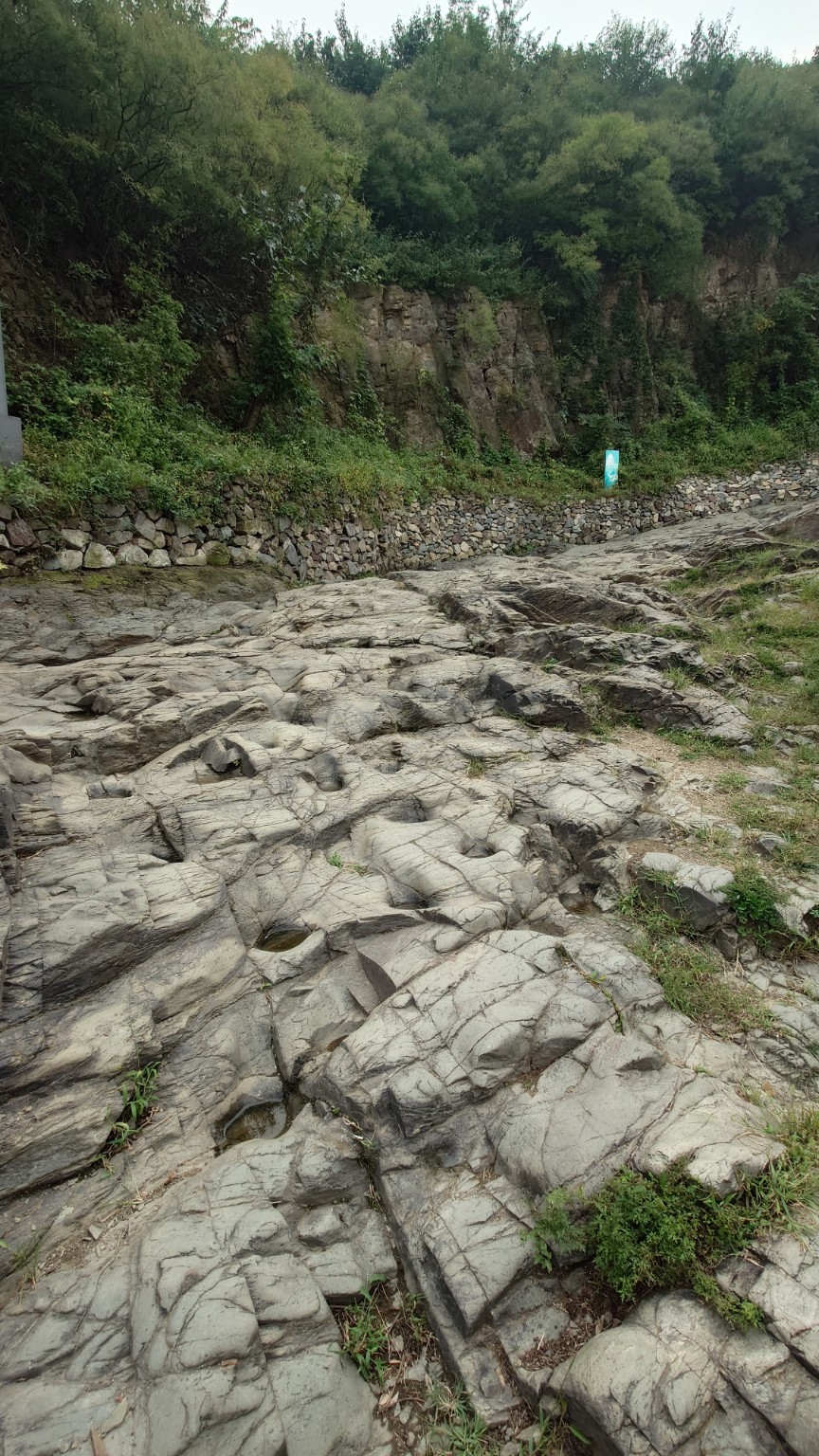
Along the Ancient Jingxi Trails in Mentougou, dozens of these indentations remain pitted deep into the bedrock. They are not natural potholes. Millimetre by millimetre, millions of strikes from iron-shod mules and packhorses hammered them into the stone while hauling coal, trade goods and the weight of everyday life along the same ridge lines.
From the Ming and Qing dynasties through the Republic era, these trails were arterial routes carrying coal and merchants into and out of Beijing’s western hinterland. Hundreds of thousands—perhaps millions—of impacts landed on hard bedrock and slab. Given enough time, even solid stone gives way. Some hollows run more than ten centimetres deep.
Standing on those stones, what hits you is not generic postcard nostalgia about a rich history. It is transport. Centuries ago, moving goods through these mountains meant human shoulders, horse backs, and one mule taking one step at a time over the pass. The mountain did not move because somebody had business on the other side. Generations of traders, porters and pack animals crawled along whatever narrow shelf the terrain allowed until they literally wore holes into the rock. That was the logistics infrastructure of old West Beijing.
Today, the answer is to bore straight through
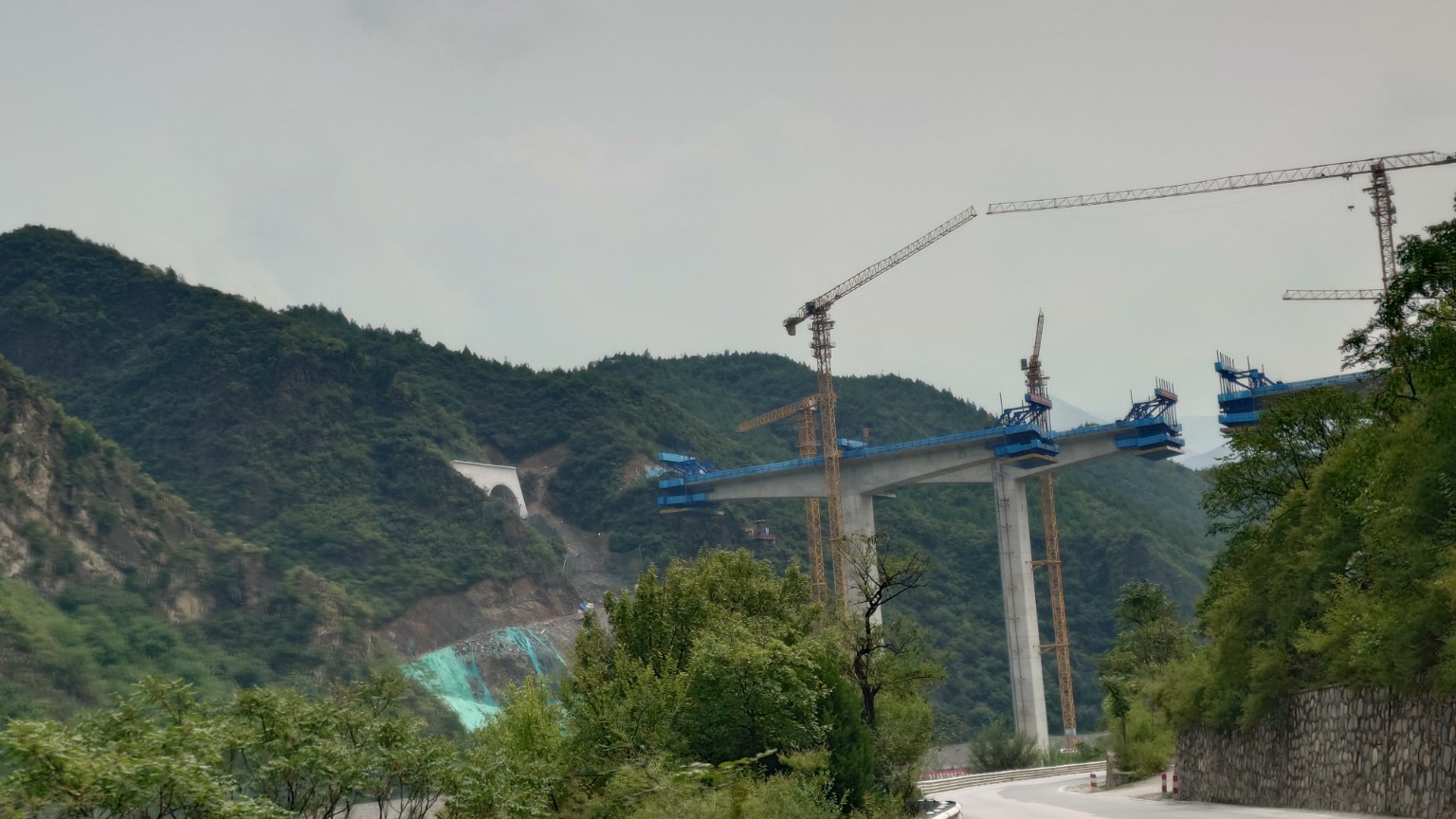
A short drive from those ancient hollows, I ran into an entirely different world. The western mountains are undergoing a massive construction boom—and this is not about widening a few country roads. It is raw, unyielding engineering: cutting through mountains and bridging every valley.
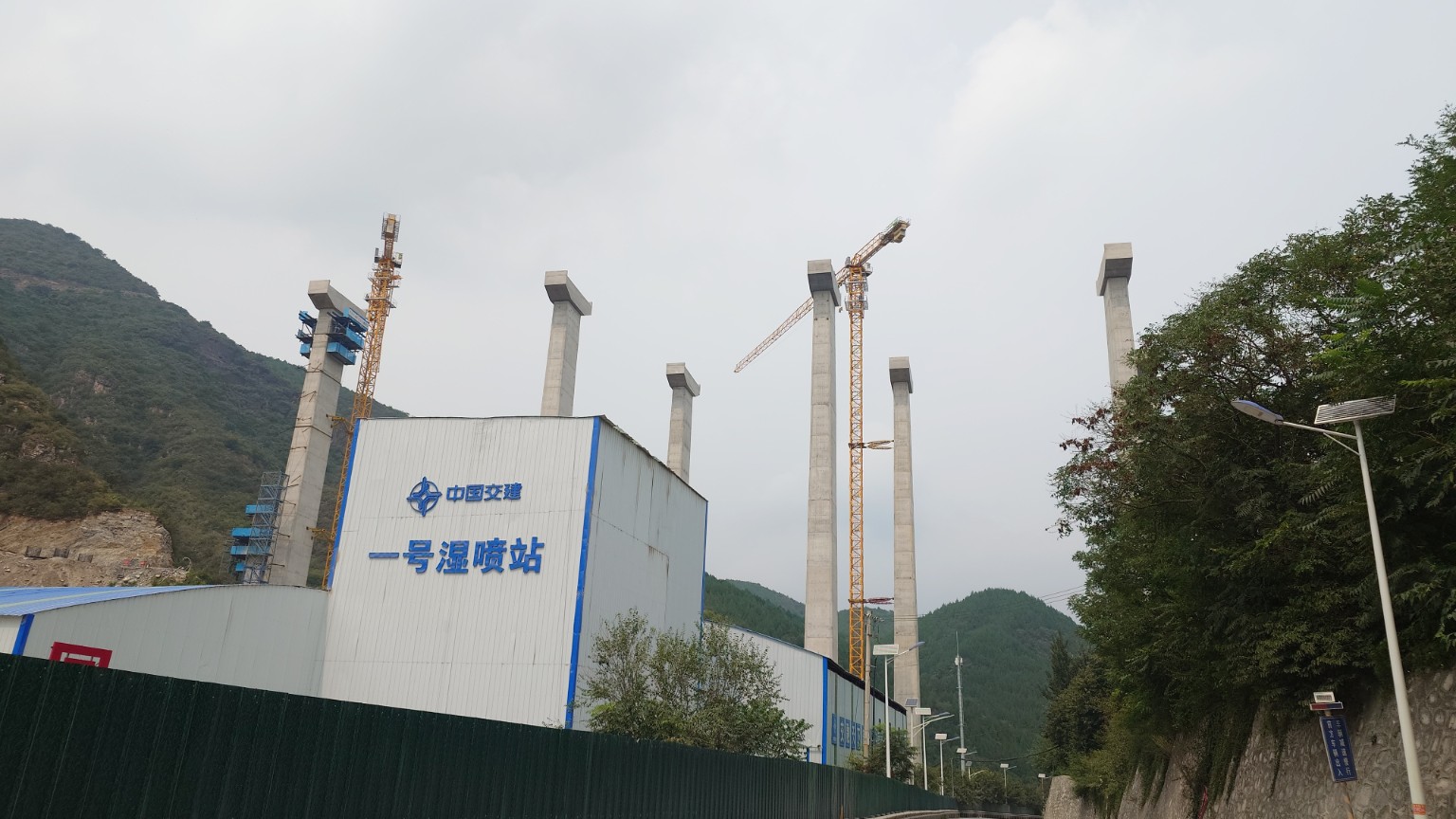
Massive concrete piers rise out of gorges. Multiple expressway viaducts are going up simultaneously. On the other side of a ridge, heavy machinery bores tunnels clean through the rock. Several bridges have reached their superstructure phase, with precast and cast-in-place spans creeping forward and stitching the valleys together piece by piece. Tower cranes stand directly on mountain slopes; work camps, bridge piers, tunnel portals and heavy rigs occupy places where travellers recently had little choice but to crawl along treacherous hairpins.
The visual whiplash is striking. After looking at mule-worn bedrock half an hour earlier, you cannot avoid setting the scenes side by side. Centuries ago, crossing a mountain meant sending millions of hooves over the crest. Today, a gorge is bridged, a mountain is punched through, and a river is spanned.
That was one of my sharpest impressions from this trip: China’s almost furious capacity for infrastructure is radically redefining the distance between these western mountains and downtown Beijing.
The economic radius is collapsing
This shift has not fully registered in day-to-day perception. Reaching the western mountains still relies heavily on the old road network. Weekend bottlenecks, sluggish winding passes, winter conditions and unpredictable journey times remain real headaches for every business venture in West Beijing. But looking at the scale and pace of the works underway, I left with a distinct conviction: in another two years or so, much of what we say today about West Beijing being hard to reach will be obsolete.
Today you see bare piers; next time the deck may already be poured. Today you see a tunnel mouth under construction; a few years from now, you may tap the accelerator and pass in thirty seconds beneath a mountain that once demanded an hour of switchbacks.
The consequence goes far beyond a smoother weekend drive. It redraws the economic radius of the region. Whether a mountain retreat is one, two or three hours from central Beijing makes it a fundamentally different business. Whether a design studio is an easy weekend detour or a committed full-day trek requires a different model. Whether an upscale mountain-view residence feels like an extension of ordinary Beijing life or an isolated country house visited twice a year comes down largely to travel time. Even the customer base of a café, bistro or boutique shop is dictated by that radius—and right now, that radius is collapsing.
Why Mentougou and Fangshan feel different now
This is why Mentougou and Fangshan feel so uniquely compelling. The natural assets already exist: real peaks and genuine canyons, clear mountain streams, centuries-old hamlets, and uncounted stone houses waiting for a second life. At the same time, new residential enclaves, modern commercial spaces and fresh residents are already settling in. Now the infrastructure gap is being closed at breakneck speed.
On their own, none of these elements guarantees much. When they converge, however, West Beijing begins to look as if it is approaching an inflection point. That does not mean it will become another urban district in two years. I hope it never does. The most precious thing about West Beijing is that the mountains remain mountains, the villages remain villages, and the quiet remains undisturbed. What changes is the friction of getting there.
Centuries ago, a packhorse walked the same path thousands of times to haul coal out of a valley, leaving a ten-centimetre divot in solid rock. Today, in the same mountains, concrete piers rise tens of metres into the sky. Two radically different eras of Chinese infrastructure are answering exactly the same question: how do we get across this mountain?
Centuries of distance, caught between two frames
I do not know what West Beijing will ultimately become. It could emerge as a hub for high-end rural getaways, draw waves of artists, designers and urban transplants, host mountain resorts of true international calibre, or produce business formats we have not yet imagined.
One thing is increasingly clear: when the time cost of entering a mountain valley drops off a cliff, ideas that once looked economically unviable suddenly begin to pencil out. Places that felt hopelessly out of reach no longer do. Villages that look sleepy, worn or forgotten may have their true value re-evaluated from the ground up.
If I had to choose a single image to explain why I am watching West Beijing so closely, I would not choose a sleek new hotel or a shiny retail complex. I would choose that slab of rock pitted with hoofprints—and place beside it a photograph of a highway viaduct rising a few kilometres away. Centuries of distance, caught between two frames.