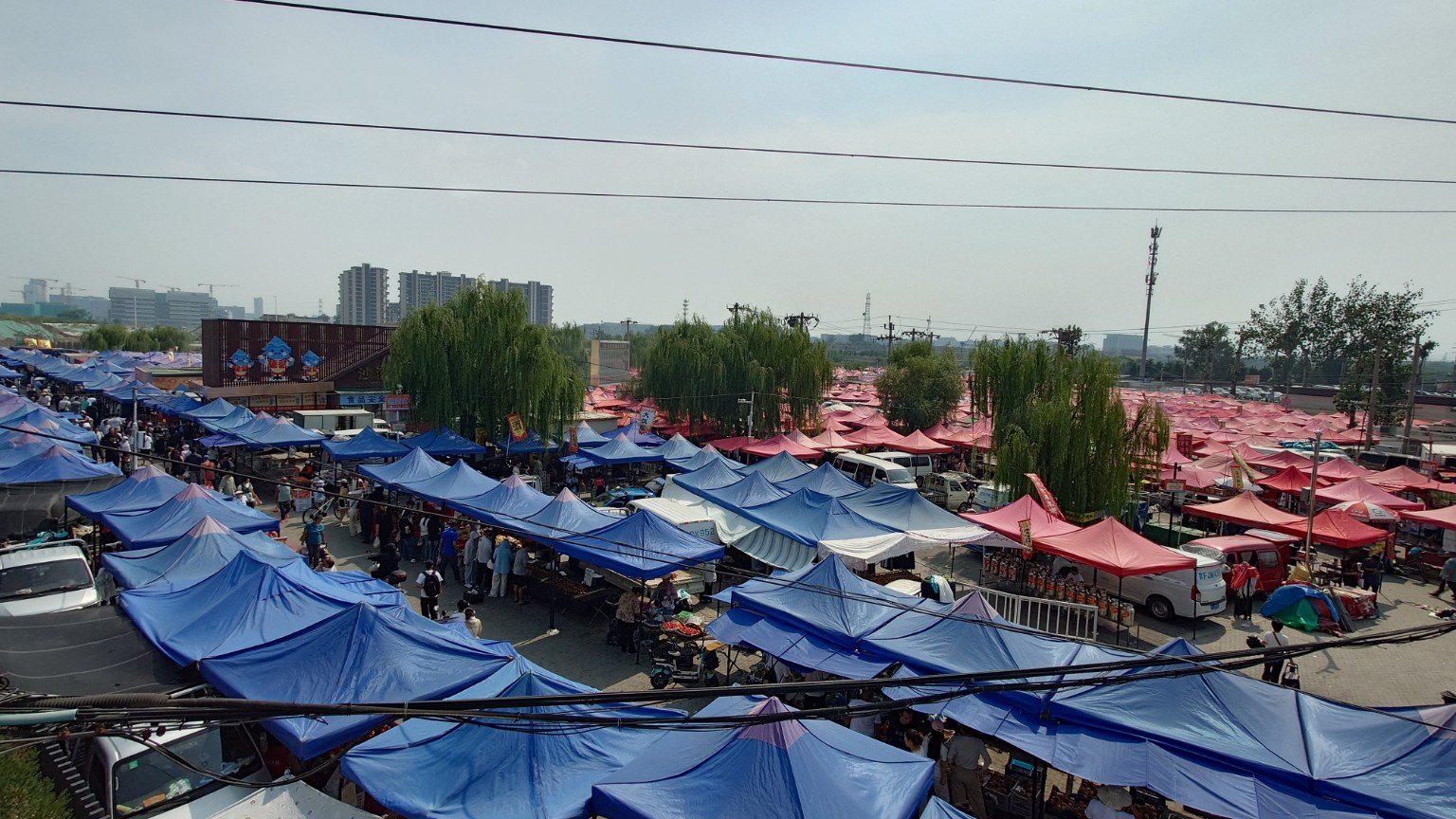
Unplug from the algorithm
Stepping into a Northern Chinese daji (大集) feels like unplugging from the algorithmic grid and plunging headfirst into pure, unfiltered humanity. These sprawling pop-up country fairs assemble on the rural fringes of megacities according to the traditional Chinese lunisolar calendar. Many Beijing markets still follow traditional date cycles such as days ending in 2 and 7, although Shahe itself now operates on its own regular weekly schedule.
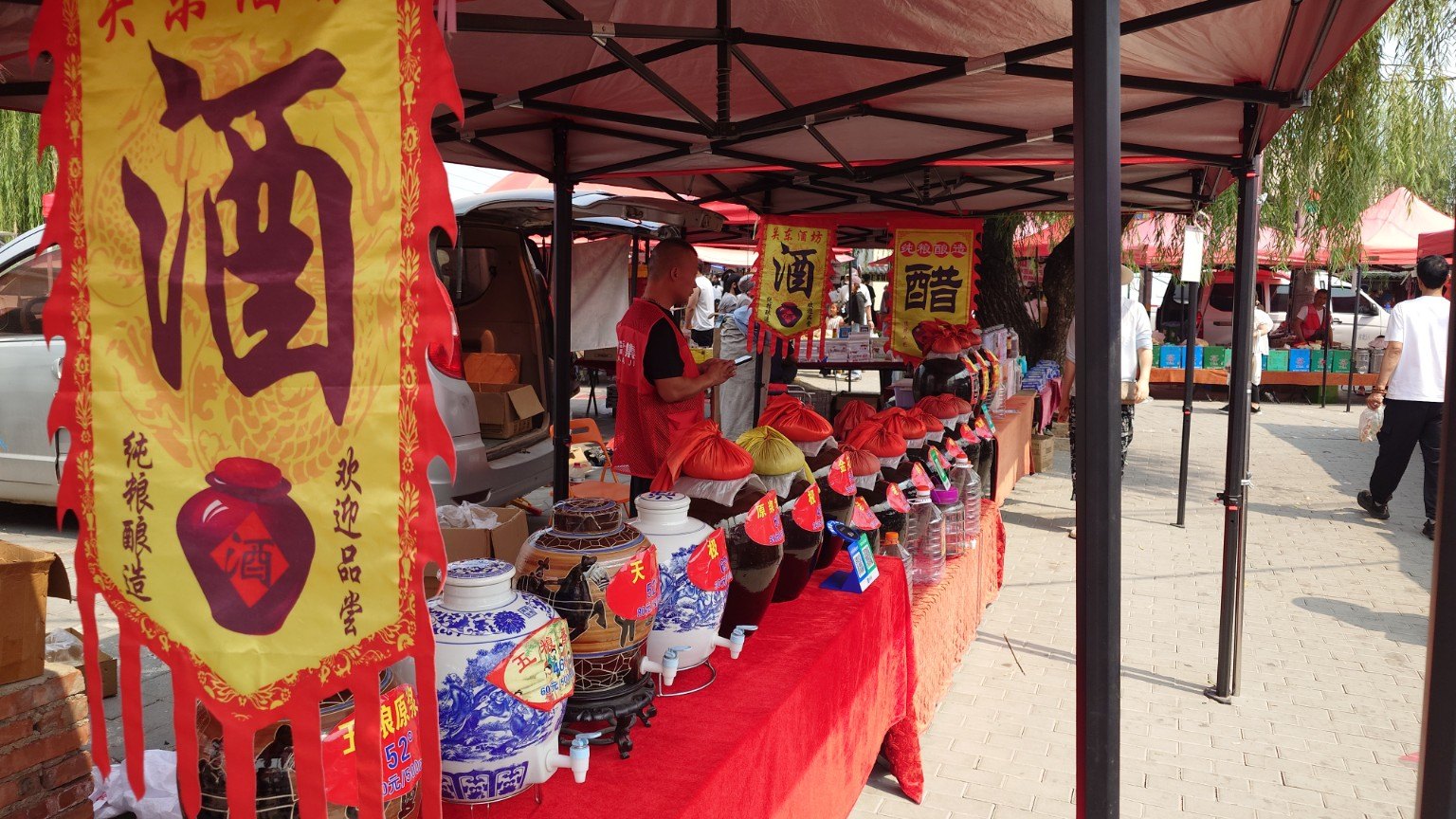
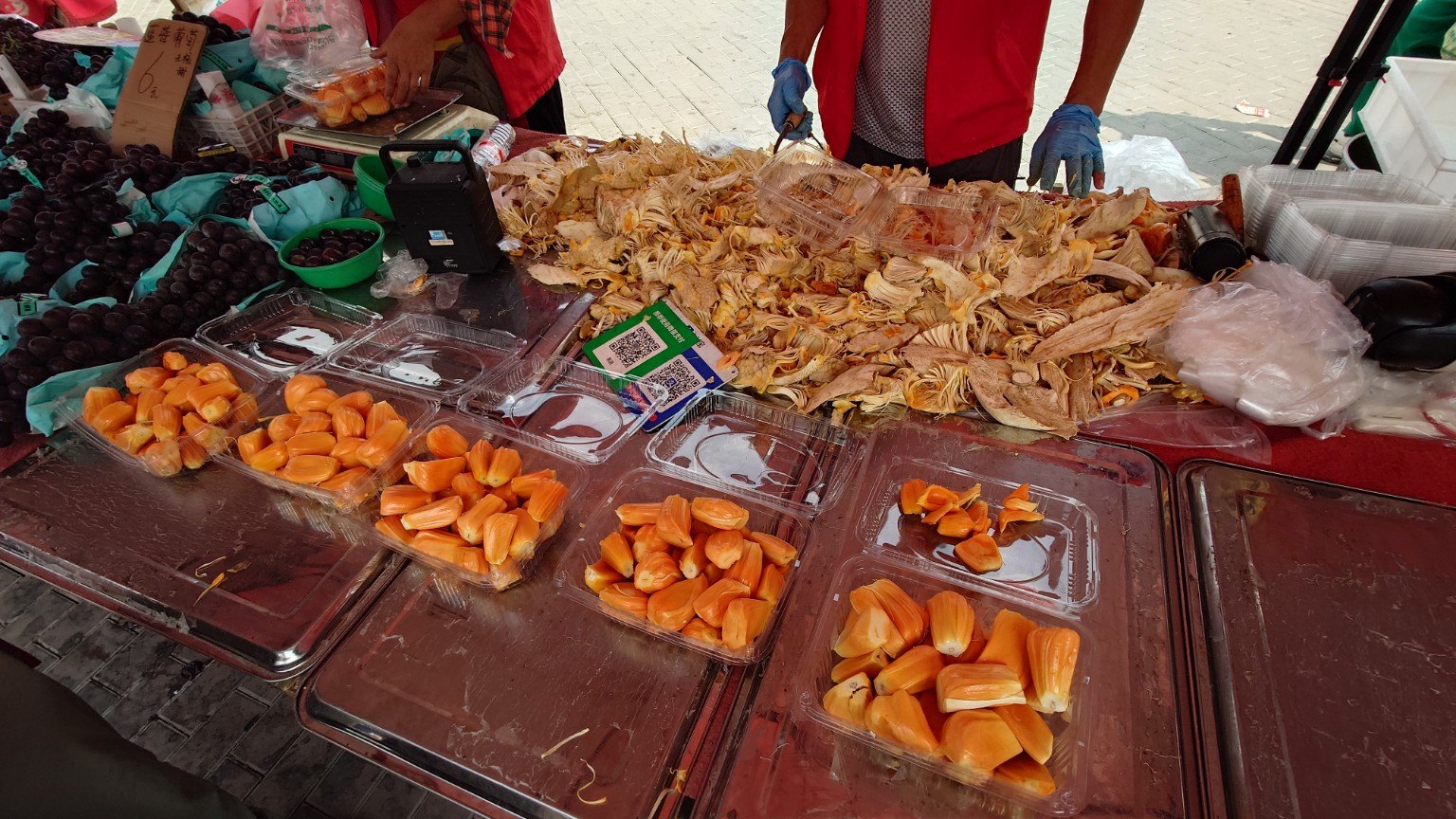
Shahe Daji runs on sensory overdrive. Beneath vast canopies of red and blue awnings, street-food stalls blur regional and global culinary boundaries. Within a few steps, you can watch hand-stretched dough slide into an outdoor wood-fired kiln—delivering crisp Neapolitan-style pizza in 90 seconds flat—right next to sizzling cast-iron griddles churning out piping-hot rou dan bao (meat-and-egg burgers). Vendors carve mountains of sweet jackfruit on the fly, while towering ceramic urns fitted with taps pour traditional bulk spirits (baijiu) and aged vinegar by the jug.
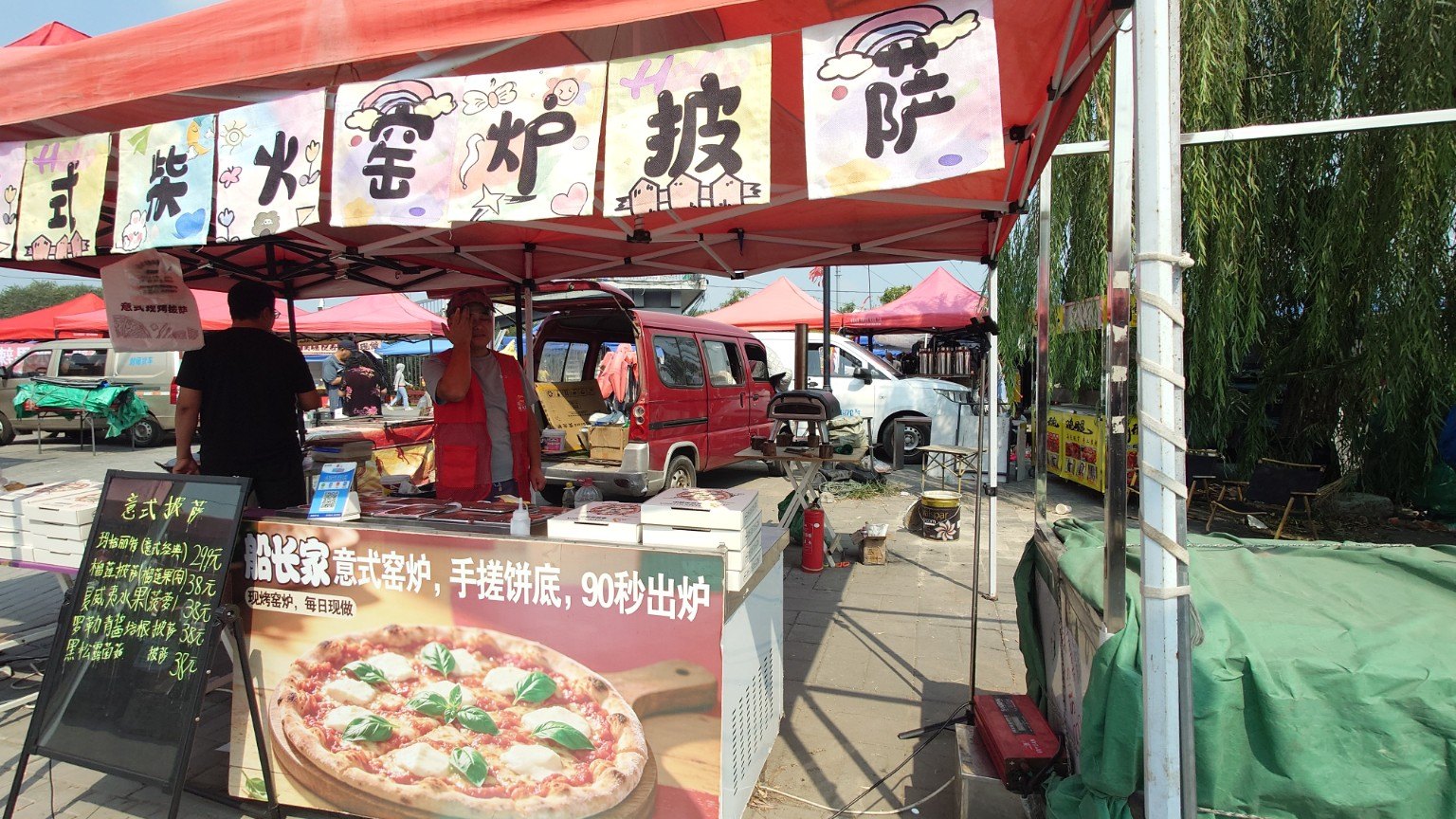
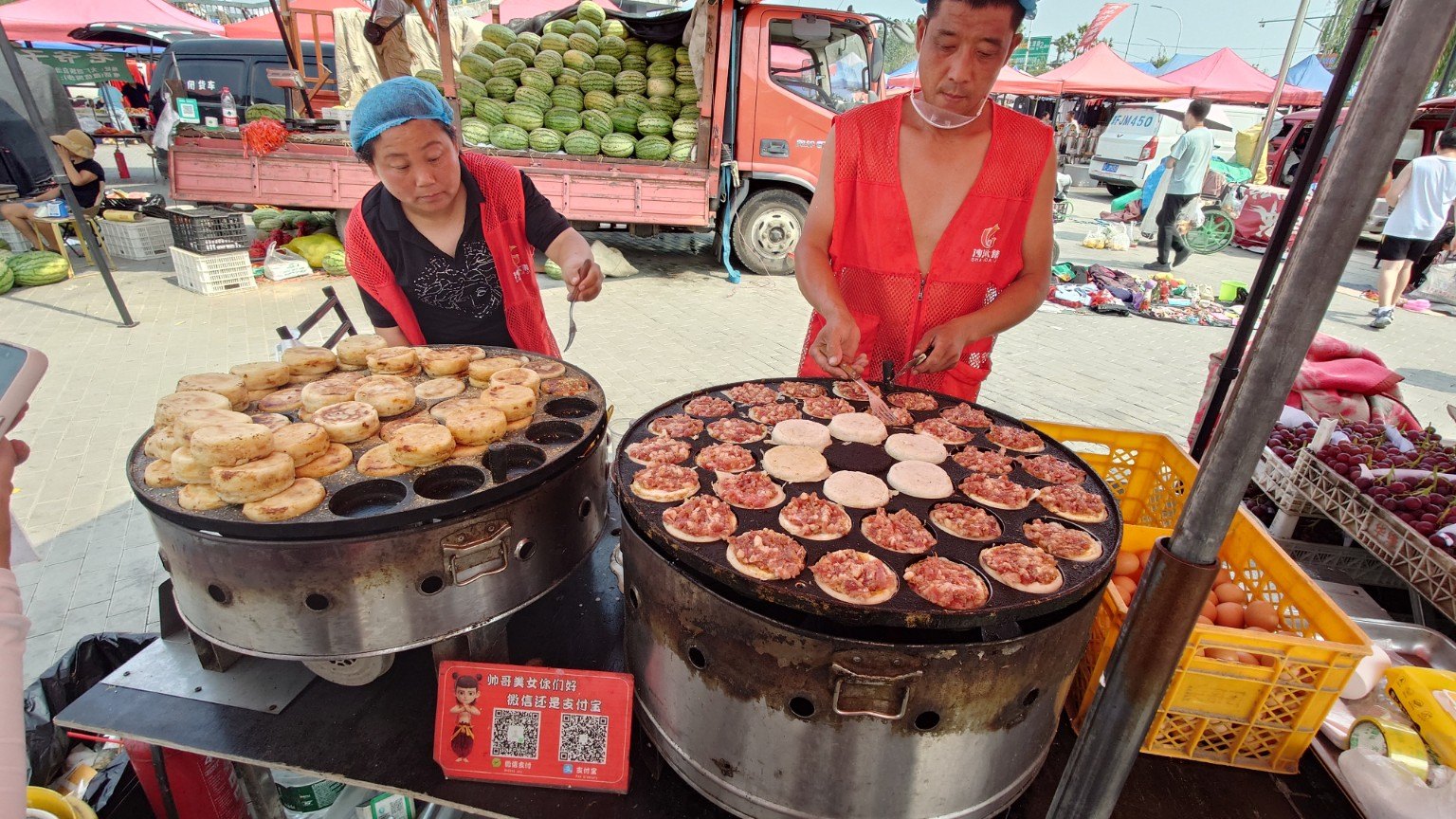
Rough, chaotic, utterly delicious
Outdoor dust and roaring burners naturally raise eyebrows among hygiene purists, but market regulars have an honest local verdict: zhen zang, zhen luan, zhen hao chi—a bit rough around the edges, chaotic, and utterly delicious. People cross half of Beijing on Sunday mornings to stock up on wholesale meats, fresh river catch, seafood and farm-fresh vegetables, pausing every few yards to sample regional street food. For anyone living the nomad life in China, escaping sterile co-working spaces to eat fresh street snacks shoulder-to-shoulder with local families is where the real pulse of the country lives.
A supermarket could never
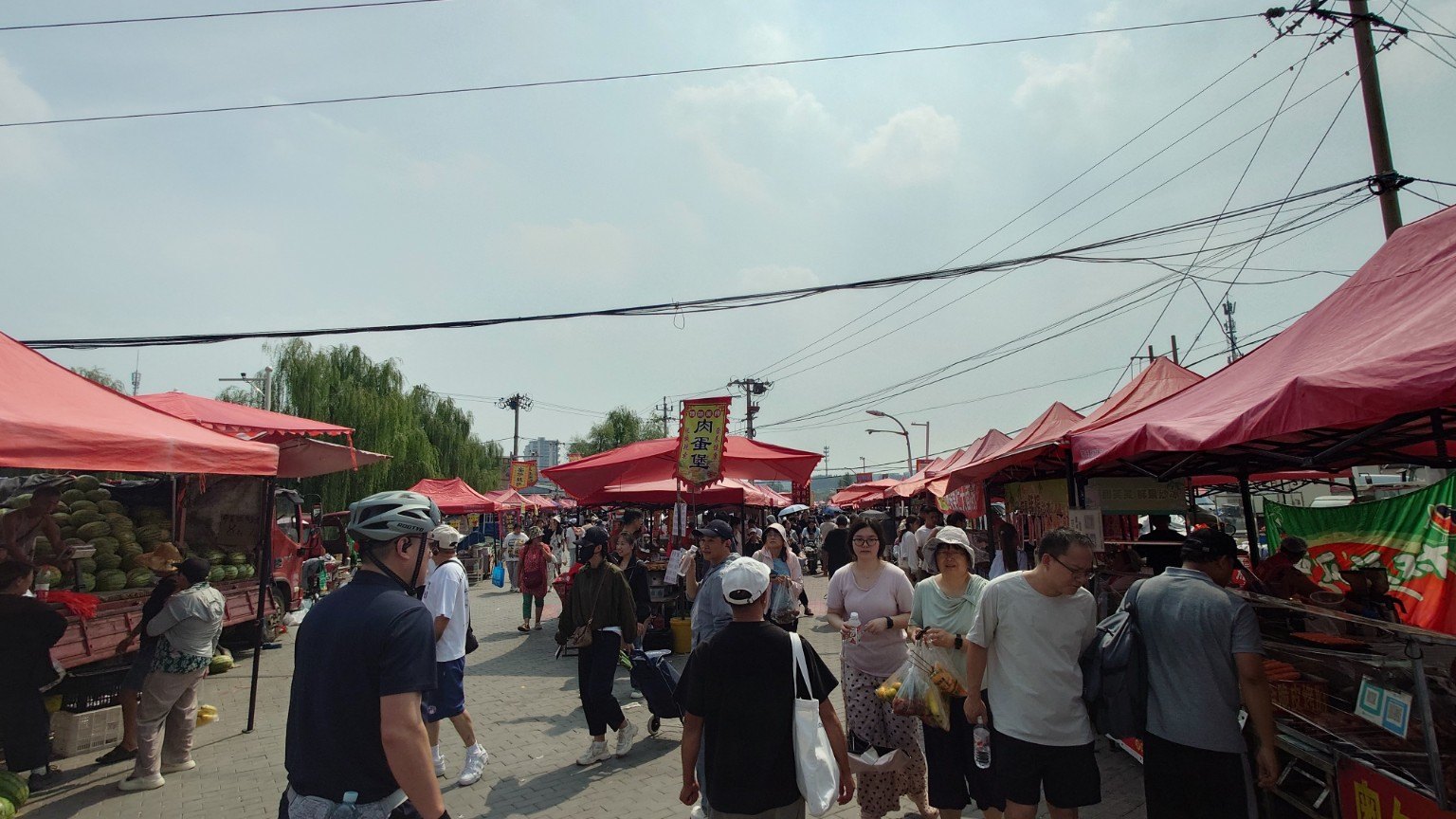
Shahe Daji is an analogue ecosystem that dwarfs any modern supermarket. From an elevated vantage point, the fair appears as an endless sea of crimson and cobalt tarps humming with foot traffic, handcarts, and vendors bellowing over portable loudspeakers. It serves as both a regional food depot and a surreal trading post where you can furnish an apartment, stock a pantry, and leave with something you absolutely did not plan to buy.
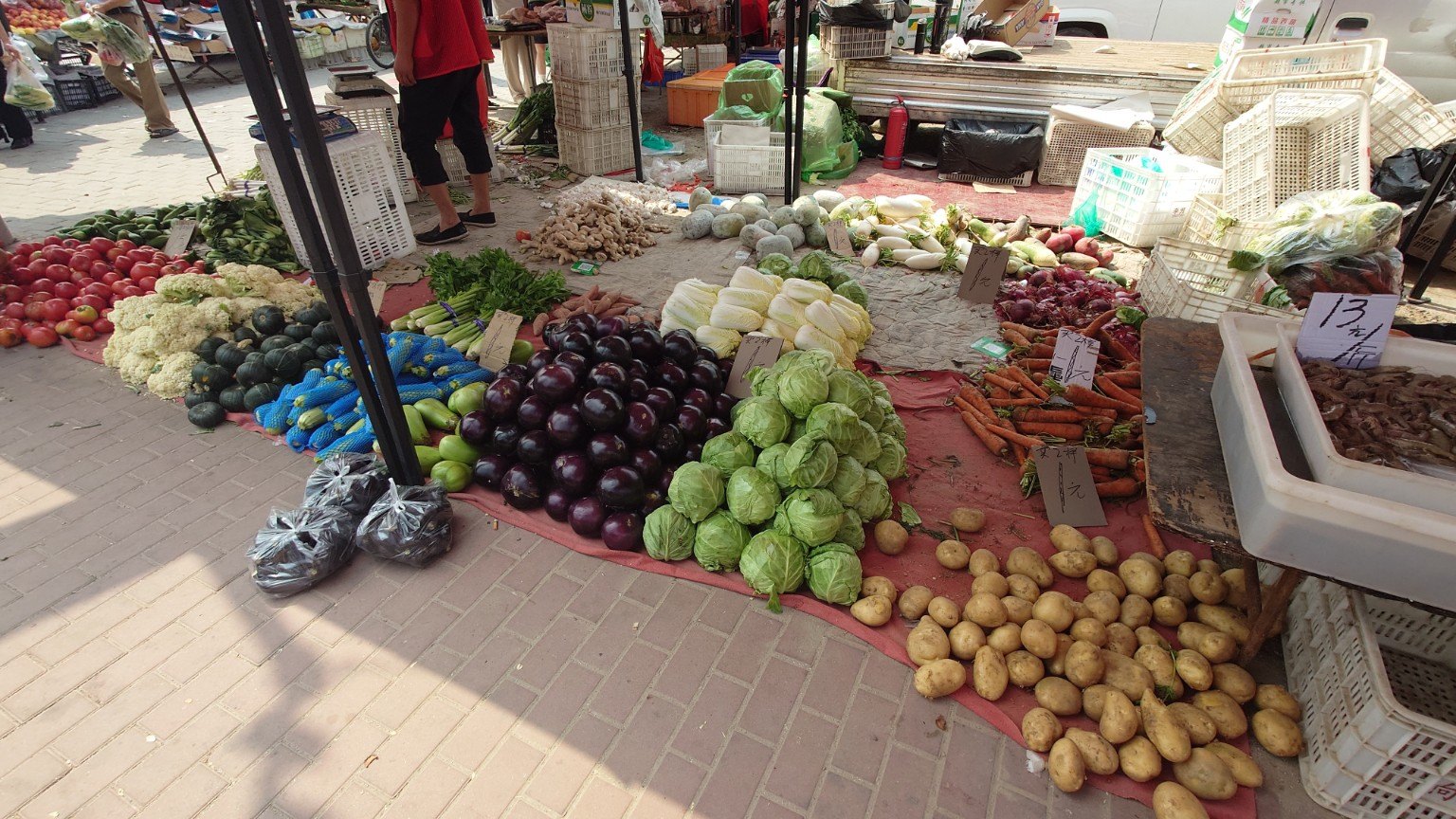
The fresh produce zone looks like an artist’s palette dumped onto the pavement: pyramids of glossy eggplants, heaps of leafy cabbages, crates of live shrimp, and truck beds overflowing with melons. Prices are dramatically lower than central-city grocery-store prices, making it a Sunday pilgrimage for budget hunters and home cooks alike.
Leave with something you never planned to buy
Wandering deeper into the dry-goods alleys reveals an eccentric mix of everyday utilities:
- Vintage & Everyday Wares: Mounds of workwear, discount kitchen gear, vintage curiosities, and quirky second-hand electronics.
- Loose-Leaf Tobacco: Several stalls display open sacks of loose tobacco among the stranger corners of the dry-goods market.
- The East-Side Surprise: Just across the highway on the market’s eastern flank sits a spontaneous pop-up pet section, complete with puppies, kittens, birds, aquarium supplies and related stalls.
The daji reset
Shahe Daji remains a true, literal ‘one-stop’ destination. If your travels in China have started to feel too curated behind digital payment screens and subway glass, a few hours hauling groceries through these dust-kicked lanes will reset your perspective entirely.